
Lisandro ALoi

Bio
Lisandro Aloi (nacido en 1978, Buenos Aires, Argentina) es un arquitecto, diseñador urbano, artista visual, fotógrafo y músico argentino. Residiendo entre Buenos Aires y Los Ángeles, y actualmente trabajando en Argentina y Uruguay, su práctica interdisciplinaria combina documentación fotográfica , exploración cultural y colaboraciones en arquitectura, Real Estate, artes visuales y música.
Vida temprana y educación
Criado en Buenos Aires con herencia italiana, la infancia de Aloi, marcada por mudanzas frecuentes y viajes globales, forjó su adaptabilidad y curiosidad. Se graduó en Saint Andrews Scots School (1996) y estudió arquitectura en la Universidad de Buenos Aires (1997), Universidad de Belgrano (1998–2001) y Universidad de Palermo (2001–2004). También se formó en fotografía en la Escuela Argentina de Fotografía (1997–1998) y en música/producción audiovisual en el Musicians Institute en Los Ángeles (2009–2012).
Carrera arquitectónica
Arquitecto licenciado desde 2004, Aloi fundó SANO (Sociedad de Arquitectura Nómade) en 2006, un estudio en Buenos Aires enfocado en diseño sostenible y culturalmente sensible en Argentina, Uruguay, Italia, Costa Rica, Ecuador y EE. UU. Proyectos destacados incluyen:
- Valle Tierra Yoga Spa (Buenos Aires, 2004)
- Che Palermo Offices (Buenos Aires, 2006–2009)
- Casa Cohen (Buenos Aires, 2008–2009)
- Casa de Vidrio (Martinez, Buenos Aires, 2007–2008)
- Delisoda S.A.(Quito, Ecuador, 2009-2010)
- Pepsi Offices (Guayaquil, Ecuador, 2009-2010)
- Manashill Residence (Los Ángeles, 2014–2016)
- Punta Rosa Master Plan (Cerdeña, Italia, 2016–2019)
- Cala Sassari Master Plan (Cerdeña, Italia, 2016–2019)
- Martindale House (Pilar, Argentina, 2018)
- Ara Homes Hotel (Buenos Aires y Costa Rica, 2020–2021)
- Casa Célula (San Isidro, Buenos Aires, 2019)
- Pueblo Punta Ballena (Uruguay, 2023 -2025)
Aloi cofundó ARA, una empresa de desarrollo inmobiliario, y AIR, una oficina de arquitectura y hotelería en Costa Rica. Sus diseños sostenibles, como el proyecto de Pepsi en Ecuador, priorizan la eficiencia energética y la reutilización de agua. Es Representante Nacional de Argentina para la Región Internacional de la AIA. (American Institute of Architects)
Contribuciones académicas
Aloi enseñó Diseño de arquitectura en la Universidad de Palermo y la Universidad de Buenos Aires durante más de 12 años, guiando a estudiantes, participando en proyectos de investigación y como jurado en varios concursos de diseño.
Carrera musical
Como Bonson Berner, Aloi compuso y grababa varios instrumentos. Su banda Siga la Flecha tocó en los festivales Pepsi Rock (2005–2007). Sus álbumes incluyen Siga la Flecha and the Panvisual Orientation System (2005), How Can I Be an Immigrant If I’m in My Planet (2012) y Reflection (2015), este último liderando listas de radio en EE. UU. Compuso la banda sonora de The Paranoids (2008) y dirigió videos musicales, como “Running Days” (2012), que ganó el premio a Mejor Proyecto de Videoclip y Música en el Musicians Institute (2012), y “Quien va a hacerlo por vos” de Guillermo Porro (2013).
Premios y reconocimientos
- Concurso Entreplanos (Buenos Aires, 2001): Ganador por “Un espacio libre en La Boca”
- Concurso SOS Ciudades (Porto Alegre, 2006): Reconocido por diseño urbano
- Concurso Euphocan, Fotografía Lúdica (Madrid, 2006): Premiado por fotografía
- Bienal de São Paulo (2006): Mención de Honor con el equipo del Arq. Marcelo Vila
- Bienal de Arquitectura de Londres (2008): Mención de Honor - Edificio Valle Tierra
- Muestras A+A – Arquitectos Artistas Argentinos (CPAU, Buenos Aires, 2009): Seleccionado
- Musicians Institute, Mejor Proyecto 2012 - Videoclip y Música (2012): Premiado por “Running Days”
Filosofía personal
El estilo de vida Nómada de Aloi y su familia impulsa su práctica interdisciplinaria, enfatizando la sinergia y el intercambio cultural. Su obra desafía las nociones de permanencia y promueve el diálogo entre la fotografía y las artes plásticas con una investigación que reflexiona constantemente con el paso del tiempo y lo relativo del presente.
Lisandro ALoi

Bio
Artes visuales y fotografía
La fotografía y el arte de Aloi, inspirados en sus viajes, exploran el movimiento y la conexión humana. Su proyecto Desierto (2015–2018) se exhibió en MARQ, Buenos Aires (2018). Exposiciones destacadas incluyen:
Sus fotolibros incluyen Lisandro Aloi - Photography and Drawings (2010), Nomadeye (2012), India – Nepal Stills
Exposiciones
- 2000: Exposición compartida de poesía y fotografía, Universidad de Waltham, Boston.
- 2004: Universo Golondrina en la Nave de los Sueños.
- 2006: Luces Electrónicas, Million, Buenos Aires.
- 2008, 2009–2010: Exposición de fotografía, Galería Gary Nader, Miami.
- 2008, 2010: Buenos Aires Photo, Galería Aldo de Souza.
- 2010: Art Americas, Miami.
- 2010: A+A – Arquitectos + Artistas, CPAU, Buenos Aires.
- 2012: Creative Migrations, Los Ángeles.
- 2013: Exposición Chain Reaction, Bergamot Station, Los Ángeles.
- 2009: Museo Municipal de Bellas Artes Félix de Amador, Luján, Buenos Aires.
- 2013: Bergamot Station Art Center- Los Angeles - EEUU
- 2015: Moblabs Gallery - Abbot Kinney - Venice Beach - Los Angeles - EEUU
- 2018: Desierto – Exposición individual, Fotografía e Instalaciones Urbanas, MARQ – Museo de Arquitectura y Diseño, Buenos Aires.
- 2025: El Devenir de los Pensamientos – Exposición individual, ESEADE, Buenos Aires.
- 2025: El origen de la pincelada - Amararte Art Galery - Galerias Larreta - Buenos Aires
Publicaciones
- Apareció en:
- Periódico La Nación (2006–2007)
- Revista SCA-Argentina (2003–2007)
- Revista Complot (2006–2007)
- Revista 90+10 (2009)
- Fotolibros:
- Lisandro Aloi - Fotografía y Dibujos (2010)
- Nomadeye (2012)
- India – Nepal Stills (2013)
- Desierto (2018)
Lisandro ALoi

Bio
Mi trayectoria como arquitecto
Empecé a trabajar en obras temprano en mi carrera. Mi primer edificio, un edificio de usos múltiples en Palermo, lo proyecté y construí estando todavía en 4° año de la universidad. Ya como estudiante me sumaba constantemente a proyectos de investigación, y ni bien me recibí en 2004 en la Universidad de Palermo comencé mi carrera docente incorporándome al equipo de Proyecto Final de Carrera.
Estar en obra es una manera cruda de aprender sobre construcción, materialidad y método para la ejecución de todo tipo de proyectos.
La arquitectura moldeó mi mano y mi trazo, y se convirtió en la plataforma ideal para una investigación muy completa acerca del hombre y su necesidades de expresarse, de construir, de manifestarse a través de los espacios que habitamos. En 2006 fundé SANO Arquitectura (Sociedad de Arquitectura Nómade). Desde el primer día invité a estudiantes a realizar pasantías y colaboraciones, manteniendo la oficina como un espacio de constante investigación y experimentación.
Durante más de 12 años combiné la práctica profesional con la docencia en la Universidad de Palermo y en la UBA, participando como jurado en concursos, dirigiendo proyectos de investigación y trabajando como consultor. Mi enfoque siempre ha sido una arquitectura contextual y culturalmente sensible.
En 2020 fui designado Representante Nacional de Argentina ante AIA International, convirtiéndome en el primer representante del país en Latinoamérica. En este rol promuevo el intercambio académico y profesional entre arquitectos argentinos y la comunidad global, me lleva a conferencias en distintos lugares del mundo y me permite relacionarme con referentes de todo el mundo. Soy un enamorado de la arquitectura y no dejo de usarla como plataforma para expresarme constantemente.
Hoy sigo con mi estudio y activo en desarrollos de Real Estate relacionados con arte y paisaje, haciendo ciudad, proyecto y conexión internacional desde Buenos Aires, con la misma pasión de siempre: investigar, construir y compartir.
English

Lisandro Aloi — Bio
Lisandro Aloi (born 1978, Buenos Aires, Argentina) is an Argentine architect, urban designer, real estate developer, visual artist, photographer and musician. Living between Buenos Aires and Los Angeles and currently working in Argentina and Uruguay, his interdisciplinary practice brings together architecture, urbanism, real estate, photography and music.
He graduated as an architect from Universidad de Palermo in 2004, after studies at Universidad de Buenos Aires and Universidad de Belgrano. In 2006 he founded SANO – Sociedad de Arquitectura Nómade, today SANOARA, a studio with projects in Argentina, Uruguay, Italy, Costa Rica, Ecuador and the United States. He co-founded ARA, a real estate development company, and AIR, an architecture and hospitality office in Costa Rica. In Uruguay he leads Pueblo Punta Ballena, an open-air commercial village in Solanas, with his partner Nicolás Golfarini.
He is Country Representative for Argentina in the international region of the AIA (American Institute of Architects). For more than twelve years he taught architectural design at Universidad de Palermo and Universidad de Buenos Aires.
His photography and visual work, shaped by constant travel, has been exhibited at MARQ – Museo de Arquitectura y Diseño (Buenos Aires), Gary Nader Gallery (Miami), Bergamot Station (Los Angeles) and Buenos Aires Photo, among others. His photobooks include Nomadeye (2012), India – Nepal Stills (2013) and Desierto (2018). He writes about architecture, art, urbanism, music, photography and real estate at Pathos Practice.
PROYECTO MARQ 2018
Instalación en el MARQ - 2018
Libros de contaduría a la intemperie
En el umbral del Museo de Arquitectura de Buenos Aires, antes de cruzar el límite que separa el afuera del adentro, una instalación detiene al visitante. Sobre el suelo, expuestos al sol, a la lluvia y al paso del tiempo, descansan libros de contaduría antiguos pertenecientes a un estudio de contadores públicos de la ciudad. Volúmenes que durante décadas guardaron el pulso administrativo de proyectos, transacciones, decisiones y promesas: el registro minucioso de aquello que alguna vez fue indispensable.
La obra desplaza a estos libros del archivo al umbral, del resguardo a la intemperie. Lo que fue cuidadosamente protegido —porque allí se cifraba la vida material de un estudio, los números que sostenían arquitecturas, oficios y nombres— queda aquí entregado al deterioro. Las hojas se humedecen, las tintas se vuelven memoria de tintas, las tapas se hinchan y se agrietan. El tiempo, que en su momento se contaba página a página, ahora avanza sobre las páginas mismas.
Y sin embargo, esa entrega al olvido no es desorden. Los libros se disponen en una secuencia rítmica, una composición que les devuelve forma cuando ya no tienen función. La instalación opera entonces como un acto de duelo y de elevación: ordena lo que dejará de existir, presenta su desaparición y nos pide mirarla. Antes de que la materia se vuelva por completo silencio, la obra le concede un último gesto de belleza.
De este modo, la pieza dialoga conceptualmente con la investigación que se despliega dentro del museo. Si la arquitectura se afirma como permanencia, aquí se la confronta con su reverso: todo aquello que sostenía la obra —cuentas, papeles, registros, oficios— también pasa, también se borra. Lo importante, entendido como aquello sin lo cual nada habría sido posible, es justamente lo que el tiempo no perdona. La instalación nos enseña, en el cruce mismo del ingreso, que entrar al museo es también entrar en la conciencia de lo que se pierde.
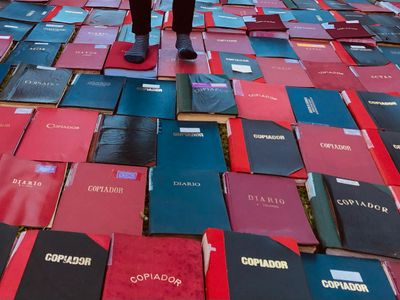
Proyecto MARQ 2018 Lisandro Aloi
Museo de Arquitectura de Buenos Aires
Instalacion en el MARQ en el año 2018
Registros a los elementos
Viejos libros de Contaduría expuestos a un mes de los agentes del tiempo.
PROYECTO MARQ 2018
Arena entre las manos
Del Desasimiento
Texto curatorial — Florencio Noceti
… los colegios de cartógrafos levantaron un mapa del imperio, que tenía el tamaño del imperio y coincidía puntualmente con él. Menos adictas al estudio de la cartografía, las generaciones siguientes entendieron que ese dilatado mapa era inútil y no sin impiedad lo entregaron a las inclemencias del sol y de los inviernos. En los desiertos del oeste perduran despedazadas ruinas del mapa…
— Jorge Luis Borges, Del rigor en la ciencia
"Pensar" se dice de muchas maneras. Pensar es calcular, definir y planear. Pero pensar también es dudar, meditar y contemplar. La primera acepción del pensamiento requiere instrumentos de medida y aparatos de captura. El pensador instrumental permanece encadenado a sus herramientas. La segunda acepción, en cambio, obliga al pensador a soltar sus útiles, y a sostenerse solo en ese desasimiento.
En un sacrificio extraño —que remite acaso al origen común del arte y de la magia— Lisandro Aloi ha entregado sus dispositivos de cómputo y sus máquinas de registro a las inclemencias de los desiertos del oeste. Al exponerlos a ese entorno inconmensurable, ha dado con una forma impensada de desprenderse de ellos: sin necesidad de abandonarlos, y por el sólo hecho de haberlos arrastrado hasta el límite de sus posibilidades técnicas, se ha vuelto naturalmente libre de soltarlos en cualquier momento.
Pero para los que nos detenemos a contemplarlo, algo en el trabajo de Lisandro Aloi repite acaso aquella frase que —según es fama— cierta escultura en el Louvre le sugiriera un día a Rilke: denn da ist keine Stelle, die dich nicht sieht. Du mußt dein Leben ändern… "aquí no hay un sólo lugar que no te vea. Debes cambiar tu vida." A nosotros, los despreocupados usuarios cotidianos de instrumentos que miden y registran y, al hacerlo, sin que nos demos cuenta, nos sujetan, este Desasimiento nos recuerda que otra vida tal vez sea posible.
— Florencio Noceti
Observar, retratar, y después la vida...
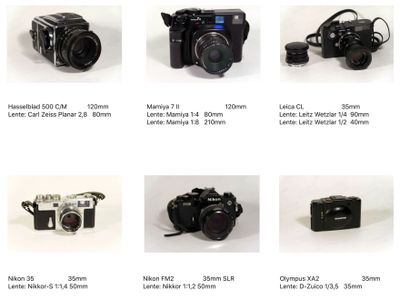
Cuando yo tenía 15 años, me regalaron una cámara 35mm SLR Nikkormat FT, con un lente Nikon 50mm f/1.8. A partir de allí, la idea de congelar escenas y narrar, para compartir situaciones e historias, me envolvió como una inconsciente y silenciosa filosofía de vida que le dio sentido a mis andares y aventuras. Encuentro paz plena cuando me entrego a la observación; y cuando ese presente —en el doble sentido de obsequio vivencial y conciencia del momento— está acompañado de un instrumento de captura, esa paz se mezcla con la edición. Tomo la actividad de editar, capturar y seleccionar a la vez como un juego y una responsabilidad.
Con los primeros trabajos llegaron los viajes a muchos países, y a la par de esas travesías fue creciendo una colección de cámaras analógicas de todo tipo y formato. Con el correr de los proyectos —producciones personales o profesionales, retratos y videos— fue decantando naturalmente una selección de instrumentos afines, con los que me fui sintiendo acompañado en mis objetivos técnicos y visuales. A los lugares inexplorados tiendo a llevar cámaras lo más chiquitas posibles: las amo y las admiro como instrumentos de diseño, cada una con su historia previa de energías y experimentos, y son también las más cómodas para pasar desapercibido, porque en los momentos que dan lugar a reflexiones profundas el observador tiene que tratar de no adoptar una actitud invasiva. A la hora de retratar en situaciones más "producidas", en cambio, encuentran su espacio los instrumentos más grandes y lentos: dispositivos más toscos que obligan al fotógrafo a tomarse su tiempo, y en esa reflexión técnica se logran a veces momentos mágicos, que entrañan un mensaje de respeto hacia la ocasión de la espera.
Las imágenes que componen la muestra se tomaron con cámaras de 35 mm y de formato medio, con toda clase de lentes y negativos —en muchos casos vencidos durante años— para investigar y representar la multiplicidad de miradas y lecturas que pueden tener lugar entre un observador y una narrativa. El resultado es un juego de variaciones, ora sutiles, ora muy evidentes, en torno a escenas bastante similares entre sí. Varias cámaras, varios lentes, varios tipos de negativos: son diferentes maneras de observar y bajar a tomas directas las mismas escenas.
Buena parte del trabajo está atravesada por el Cross Processing: el revelado de los negativos con químicos cruzados, distintos a los que les corresponden. En este caso, diapositivas o slides reveladas con el proceso C41 —usualmente reservado para negativos color—. Ese desvío químico explota los colores en direcciones imprevistas y estresa los haluros de plata presentes en la emulsión, produciendo un efecto de puntillismo que muchas veces se describe como un grano que "explota". Usé este método de estrés en el negativo a lo largo de toda mi carrera y está muy presente en estos trabajos. No hay manipulación digital: los tonos, las saturaciones y las paletas son producto de los químicos del negativo, de cómo le pegó la luz y del proceso de revelado.
Muchas de las tomas terminan, además, en el desierto: ahí son "tachadas" e "intervenidas" con pinceladas que las recubren nuevamente. Esa última capa cierra el gesto. Porque, en el fondo, esta colección de imágenes es el resultado de otras colecciones: colecciones de cámaras, lentes y negativos; colecciones de reglas, sellos y fotos; colecciones de heridas, llantos y risas.
acrilicos y Oleos
El Origen de la pincelada
El origen de la pincelada
Texto curatorial — Leonor Lisman
Aquellas “medidas” que alguna vez representaron hitos importantes en nuestras vidas, terminan, a lo largo del tiempo, desvaneciéndose o escurriéndose como arena entre las manos, o a lo mejor terminan perdurando en nuestra mente, distintas pero iguales como podría ser una imagen del desierto. El trazo fue un desahogo, una reafirmación, o mejor aún, ¿un comienzo?
Años después, ese trazo se expande de maneras curiosas, abstractas, gigantes, saturadas, liberadas o figuradas, como pensamientos o como células, como ciudades o formas que vienen y se van. Son mentes que sostienen y se sostienen.
¿Qué hay en ese intento de capturar o atrapar ya sea con la cámara o con el pincel? Tal vez es eso, es el incesante juego de atrapar lo que antes fuera la arena y lo que hoy es el tiempo.
Leonor Lisman
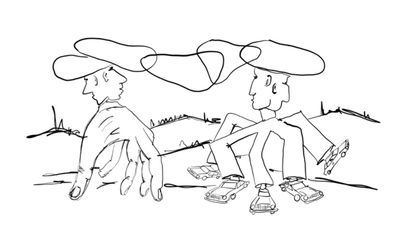
Durante los años 2024 y 2025 trabajé a diario con acrílicos y telas. Lo que empezó en un sinfín de dibujos en lápiz, tinta y cualquier formato a mano en el estudio de arquitectura, empezó a aparecer en telas. Los primeros bocetos eran una especie de caricaturas y manos tratando de agarrar unas formas blandas que parecían escaparse entre las manos. Fue una especie de reinterpretación de la metáfora de la arena entre las manos, pero en este caso parecía un juego de las mismas tratando de atrapar estas formas blandas, que pronto vi como pensamientos.
Estaba tratando de atrapar pensamientos con el dibujo, y esta metáfora me disparó todo tipo de reflexiones sobre cómo transmitir nuestras emociones, duelos, trabas, búsquedas, intrigas y desafíos a través del dibujo. Tantos pensamientos acumulados salían como podían, brotaban. Este fue un momento muy importante, visceral, en el que me abocaba horas y horas a trabajar sobre el tema que en cada instante me inspiraba. Sentí que nuevamente estaba trabajando en obra con un trasfondo filosófico, una evolución de aquella reflexión en los desiertos, a través de múltiples lentes, de múltiples objetos…
Toda esta búsqueda y cantidad de obras se mostró en dos muestras en 2025. La primera fue muy interesante porque el equipo de curadores decidió mostrar, en una universidad de arte, el resultado de esa búsqueda. Después de todos los bocetos, escenas más teatrales, situaciones urbanas y todo tipo de trabajos, empecé a dibujar solo esos “pensamientos”. Era como si hubiera cambiado la escala y me metiera adentro de una meditación, de cómo funciona la mente. Uno piensa algo, luego otra cosa encima, y así va construyendo capas de líneas de pensamientos que arman una línea conceptual… Eso trabajaba en estas obras: capas de pinturas sobre capas de pinturas que van creciendo una encima de la otra, para llegar a resultados de horas y horas de intervenir sobre lo ya pintado. Cuando vinieron los curadores de la muestra al taller, decidieron mostrar esas obras orgánicas de pensamientos como eje principal: mostrar “a lo que llegué”, y me sentí identificado, mostrar el resultado y no tanto el proceso.
De todas maneras, unos meses más tarde dimos forma a una nueva muestra con una de las curadoras que había sido protagonista en el armado de la muestra anterior de ese año. Queríamos completar una historia: no solo mostrar la evolución hacia esos pensamientos en acrílico y óleo, sino relacionarlo con una búsqueda que había arrancado hacía muchos años.
A continuación se presentan muchas de esas obras en acrílico y óleo que se mostraron en ambas muestras
Contact Us
Contacto
Por proyectos mandarme una nota o email. Saludos
Lisandro Aloi

Entrevista Sobre Arquitectura Arte y Negocios, publicada en
Art, business, and architecture: the quiet framework of good work
ENTREVISTA A LISANDRO ALOI publicada en New York Today
Arte, negocio y arquitectura: la trama silenciosa de una buena obra
Hay arquitectos que dibujan, otros que construyen, y unos pocos que entienden que la obra empieza mucho antes del primer trazo y termina mucho después de la entrega de la misma. Lisandro Aloi —arquitecto argentino, docente universitario, músico durante años, artista visual y primer representante de la historia en Argentina del American Institute of Architects—mira desde muchas direcciones. Fundador de SANO (Sociedad de Arquitectura Nómade), un estudio que abraza la asociación con colegas de formaciones y geografías distintas transita con naturalidad entre el atelier, la mesa de proyecto y la mesa de negocios. Para él, el arte, la cultura y el negocio no son mundos enfrentados sino capas de un mismo gesto creador, y entender cómo se entrelazan es un oficio del arquitecto contemporáneo.
En Buenos Aires nos recibió en su estudio, rodeado de croquis, libros sobre Grandes maestros como Antonio Bonet y Tadao Ando, y maquetas de proyectos en distintas etapas. De moverse por todo el estudio haciendo croquis, pasa a hablar pausado, como quien ha pensado mucho cada palabra. Y cuando finalmente las pronuncia, lo hace con la convicción de quien disfruta el proceso de hacer arquitectura. Hablamos de lo que poco se cuenta en las revistas de diseño: la arquitectura como negocio, los proyectos en marcha, los viajes que reformularon su mirada y la responsabilidad ética de quienes construyen el espacio donde otros vivirán durante décadas.
Arte, negocio y arquitectura. Suelen presentarse como mundos opuestos. ¿Vos cómo los ves?
Es un tríptico…son capas fundamentales para resolver una demanda, una necesidad con un sentido completo, integro. Arte a la vez pueden ser muchas otras cosas, pero es otra charla…, de cada una podrías abrir un abanico. Uno de los primeros teóricos de arquitectura, Vitruvio, quien escribió el primer tratado de arquitectura de la historia en el siglo I a.c , ya hablaba de Firmitas Utilitas Venustas….Firmeza, Utilidad y Belleza… Ese dato solo ya nos dice mucho de esta relación… No es una discusión nueva. La arquitectura sin “negocio” se queda en el papel; y el negocio sin arte ni arquitectura se convierte en pura especulación, edificios que envejecen mal y barrios o ciudades que pierden alma y cultura. Lo que inspira y perdura aparece cuando logran convivir. La obra que admiro siempre tiene esas tres capas. Hay una intención o “voz” profunda, una resolución arquitectónica precisa y una lógica económica que hace posible que esa obra exista, se mantenga y se valore con el tiempo. Pretender separarlas es una ingenuidad romántica que la práctica desmiente todos los días. Los arquitectos que más respeto entendieron tempranamente que negarse al negocio no los hace más puros, los hace, en su mayoría más irrelevantes.
El arte encabeza ese tríptico y, en tu caso, no es un dato abstracto: también sos artista visual. ¿Cómo aparece el arte en tu carrera?
Dibujo desde que nací, te diría. De chico, las paredes de mi cuarto fueron mi primer lienzo… después otras paredes, no siempre con permiso. Después, ya de estudiante, empecé a trabajar como fotógrafo de arquitectura de viajes, documentando ciudades de todo el mundo. Y desde esos años de facultad fui mostrando fotografía y obra en muestras, en instituciones y galerías. Una importante fue la del MARQ, el Museo de Arquitectura de Buenos Aires. Pero no quiero ahondar demasiado en la carrera artística, porque no es ahí donde está lo interesante. Lo interesante es otra cosa: hacer obra habla exactamente de lo mismo que hacer arquitectura. Es relacionar una creación con un espacio, contar una historia, una idea… y lograr que esa idea, a su vez, sea obra bella. Venustas, otra vez Vitruvio. Bella para que alguien la quiera, la elija, la exponga; para que cumpla esa función tan plena que solo el arte sabe darnos. Cuando entendés eso, el dibujo, la foto y el proyecto dejan de ser disciplinas separadas. Son el mismo gesto, mirado desde distintas ventanas.
¿Por qué insistís en que un buen negocio es condición de una buena arquitectura?
Porque la arquitectura se hace en un terreno, en una economía, en una cultura, con un cliente, necesidades, plazos y números. Si hablamos del mercado de Real Estate, cuando el proyecto entiende su lugar y su tiempo, vende mejor, se vive mejor y envejece mejor. Eficiencia y buena arquitectura no se pelean; cuando dialogan, generan valor. Una decisión sensible —un patio interno bien colocado, una orientación que aprovecha la luz, un material local que respira con el clima— puede sumar metros vendibles, bajar costos operativos y, al mismo tiempo, ser un espacio que genera vivencias buenas, de luz, ventilación, resiliencia…. Ese es el verdadero rendimiento: cultural y financiero a la vez. Subestimar el negocio es ingenuo; subestimar la calidad de la arquitectura, una palabra que no me gusta mucho, pero es precisa… es vulgar. Los desarrollos inmobiliarios que diez años después siguen siendo deseados son los que entendieron que la calidad arquitectónica no es un costo extra: es la principal razón de valor a largo plazo. Lo barato se nota, lo mediocre también, y el mercado, tarde o temprano, los castiga.
Decís que cultura y eficiencia se potencian. ¿Cómo se traduce eso en una operación concreta?
Te doy un ejemplo de mi propia carrera, mi primer proyecto grande. Recién recibido, me tocó resolver ocho viviendas de lujo de trescientos metros cuadrados con salida directa al Río de la Plata, sobre un terreno limitado por un FOS muy ajustado, (Factor de Ocupación de Suelo, que es la pisada del proyecto, para el que no sabe), donde además no podía materializar límites cercados entre las casas. La respuesta fue diseñar patios internos: metían sol, luz y ventilación cruzada en todos los ambientes, generaban una relación directa con la vegetación desde el corazón de las viviendas y las agrandaban perceptualmente sin computar FOS. Pero acá está lo interesante: esos cuarenta metros cuadrados extra de cada patio pasaban a ser privados, lo que permitía vender cuarenta metros adicionales por unidad. Una sola decisión de arquitectura mejoraba la calidad de vida en seis o siete dimensiones distintas y, además, incrementaba la ganancia del desarrollo en un quince por ciento. Eso es lo que entiendo por cultura y eficiencia trabajando juntas: no se trata de elegir entre lo que que hace mejor arquitectura y lo rentable, sino de encontrar las decisiones que sirven a las dos.
¿Y la dimensión cultural? ¿Cuánto pesa el lugar en la decisión proyectual?
Pesa todo. Yo creo que el problema de mucha arquitectura contemporánea es que el diseño le ganó a la cultura. Los algoritmos, las redes, los renders, todo empuja hacia un lenguaje global y aplanado, donde un edificio en Dubái podría estar en Buenos Aires o en Singapur sin que cambie demasiado. Eso, para mí, es un empobrecimiento. Otra vez… son charlas y discusiones que aparecieron hace mucho, muy fuerte con teóricos de la revolución industrial… después en publicaciones como De STijl… o en la Bauhaus, más recientemente en la “arquitectura internacional” de los grandes maestros de la postguerra…. En criollo, La arquitectura buena respira el lugar donde se planta. Mira los materiales locales, la luz local, las costumbres locales, la historia del barrio, si es urbana…. Para que el edificio dialogue con su entorno, su cultura, y por esa vía, también dialogue con quienes lo van a habitar, no los “achate”. Otra vez, es negocio puro: la gente compra emoción, compra pertenencia, compra historia. Un edificio que conversa con su lugar vale más, se vende mejor y se quiere más. La cultura no es un adorno: es un activo económico, aunque los balances no lo midan así.
Detrás de cada arquitecto hay un equipo. ¿Qué peso tienen los socios e inversores?
Definen casi todo. Con gente sana, los proyectos vuelan: los obstáculos —que siempre llegan, no es opcional— se enfrentan con criterio, con altura y con velocidad, y los socios de primera se ponen al servicio de la obra, no al revés. Pero también existen los inversores dañinos, los que no piensan en el proyecto sino en cómo sacarle ventaja al de al lado. Esos pueden frenar una obra durante años e incluso caer en bajezas morales bastante difíciles de digerir para sacar provecho. He visto proyectos espectaculares detenidos por la mezquindad de un solo socio, y proyectos imposibles destrabados en una tarde por un equipo que decidió remar todos en la misma dirección. Como todo se aprende andando, hay gente muy buena y muy mala dando vueltas. Si hay algo que aprendí es que hay que elegir bien los socios, buscar buena gente. La arquitectura es un deporte colectivo. Sin un buen equipo proyectual y empresarial, tirando para el mismo lado, ni el mejor diseño llega a buen puerto.
Tu rol en el AIA te tiene viajando bastante. ¿Qué te están dejando esos viajes?
Mucho, y muy difícil de procesar al volver. Representar al AIA es un Honor, primero, y Las conferencias internacionales del American Institute of Architects me obligaron a salir del propio mapa conceptual. Estuve en conferencias en Dubái, Hong Kong, Londres y México, entre otras, recorriendo ciudades enteras con colegas que admiro. Dubái te confronta con la escala, con la velocidad y con preguntas incómodas sobre sostenibilidad e identidad. Hong Kong es una lección de densidad y de cómo lo vertical, bien resuelto, puede ser profundamente humano. En México, por ejemplo, hice un recorrido inolvidable con Jacob van Rijs, de MVRDV, el estudio de los Piases Bajos, no solo una eminencia, pero un referente de cuando era estudiante. Caminar una ciudad varios días con alguien de su nivel es una clase magistral en movimiento: intercambias maneras de ver las fachadas, qué detalles interesan, cómo conecta lo que está viendo con problemas urbanos de su cultura o escala global. Igual con un socio de Christian Keretz recorriendo su pabellón para la feria mundial de Dubái… tantas anécdotas. Te das cuenta de que el ojo entrenado piensa todo el tiempo, no descansa. Cada uno de esos viajes me dejó un cuaderno lleno y la convicción de que hay buena arquitectura en los cinco continentes, mucho más distribuida de lo que el algoritmo de las redes nos quiere mostrar. Volvés con la mirada limpia y con la certeza de que el oficio es enorme y de que uno todavía está aprendiendo, por más años de profesión que tenga encima.
También estás escribiendo. ¿Qué es ese paper en el que estás trabajando?
Estoy armando un texto que cuenta algo del recorrido de SANO, nuestro estudio, las decisiones que nos formaron, los proyectos que nos definieron, los aciertos y también los errores que más nos enseñaron. Y dentro de ese marco aparece una propuesta concreta de vivienda social rural para la Argentina. Es un trabajo que mezcla las tres cosas que más me interesan: negocio, arquitectura y un approach social genuino. La Argentina rural tiene un déficit habitacional enorme y, a la vez, una riqueza cultural y paisajística inmensa que está siendo subestimada por la planificación pública. La pregunta es cómo diseñar tipologías replicables que sean económicamente viables, arquitectónicamente dignas y socialmente transformadoras, sin caer ni en la caridad mal entendida ni en el negocio puro y duro. Cómo usar materiales de la zona, cómo involucrar a la mano de obra local, cómo pensar el modelo de financiamiento para que escale sin perder calidad. Estoy convencido de que se puede, y que ese tipo de proyectos son los que justifican muchas horas de mesa de proyecto. Cuando esté listo voy a compartirlo, porque la idea es que sea una fuente abierta e invitar a otros a discutirlo, criticarlo y mejorarlo.
Hablemos de Pueblo Punta Ballena, recientemente mencionado por Forbes Uruguay. ¿Qué se viene ahí?
Pueblo Punta Ballena es uno de esos proyectos en los que se siente que confluyen muchas cosas a la vez: paisaje, cultura uruguaya, demanda internacional, escala humana, una historia cargada. La nota de Forbes Uruguay puso el foco en algo que veníamos construyendo en silencio, y la verdad es que se viene una nueva etapa muy buena. Estamos trabajando en capas: la consolidación urbana, la incorporación de nuevas piezas arquitectónicas que respeten el espíritu del lugar y, a la vez, lo proyecten al futuro, y una propuesta comercial que crecerá con el lugar. Punta Ballena tiene una identidad inconfundible, marcada por sus pioneros y por una geografía privilegiada, y la oportunidad es enorme si uno la trabaja con paciencia. Lo que se viene me entusiasma mucho, y creo que entiende el desarrollo costero uruguayo, que tiene una historia y arquitectura muy rica, aportando que se puede crecer sin perder alma.
Y en Buenos Aires está el ciclo Ara Homes. ¿En qué etapa están?
Ara Homes es una apuesta que mezcla paisaje, arquitectura y negocio en el corazón de Palermo. El primer edificio fue un éxito en todos los frentes —comercial, arquitectónico y de experiencia de usuario— y eso nos dio la energía y la legitimidad para encarar un segundo edificio que estamos lanzando ahora. Es una gran inversión, con una visión muy clara: traer la vegetación al centro de la ciudad, generar espacios que respiren, integrar luz natural y materiales nobles, y hacerlo todo con una racionalidad económica que justifique su escala. El primer ARA probó la hipótesis; el segundo buscamos un escalón más arriba, sumando aprendizajes concretos del primero y elevando la calidad de los espacios comunes y terminaciones. Creo que va a funcionar muy bien, que es difícil de lograr en un mercado que muchas veces premia el grito por encima del susurro. Para mí, Ara Homes es una prueba viva de que arquitectura, paisaje y negocio, cuando trabajan en conjunto desde el primer croquis, generan mucho más valor que cuando se piensan por separado.
¿Qué referentes te formaron y qué nuevas voces estás siguiendo hoy?
Mis referentes vienen de mundos muy distintos, para el que quiera investigar…. Antonio Bonet, un catalán que encontró en el Río de la Plata un equilibrio único entre poesía y práctica. Amancio Williams, con su Casa del Puente. La arquitectura brasileña, paulista y carioca, una máster class en cómo dialogar con el clima y el paisaje. Alvar Aalto...tantos… Y la constelación japonesa, desde Kenzo Tange hasta Tadao Ando, Sou Fujimoto, Kengo Kuma, Ryue Nishizawa, Kazuyo Sejima. La escuela uruguaya, menos por nombres, pero por su todo… llena de poesía. Y, gracias al AIA, una riqueza enorme en estudios africanos y asiáticos que en mi formación universitaria estuvieron prácticamente ausentes. Lo que quiero subrayar, sobre todo, es que constantemente aparecen nuevas voces muy interesantes. Voces difíciles de encontrar entre la masividad de la comunicación de hoy, donde el algoritmo amplifica lo ya conocido y entierra lo emergente, premiando la repetición por sobre la búsqueda. Pero están. Siempre están. Aparecen en estudios pequeños, en países que rara vez son tapa de revista, en oficinas de tres personas haciendo obras que dentro de diez años todos vamos a citar. Descubrirlas a tiempo es parte del oficio: requiere viajar, leer publicaciones independientes, escuchar a colegas en otros continentes, ir a charlas que no convocan multitudes y desconfiar un poco de la propia burbuja. La buena arquitectura del próximo siglo se está cocinando, hoy mismo, en lugares que ningún feed mainstream te muestra. Y parte de mi entusiasmo profesional pasa, justamente, por seguir buscándolas.
Si tuvieras que dejar un mensaje a un joven que está entrando a la profesión, ¿cuál sería?
Que estudie, que viaje, que mire mucho, que dibuje a mano, que haga pasantías para entrar a un buen estudio, y que aprenda a leer a la gente tan bien como aprende a leer un terreno. Que no haga la arquitectura que “se está haciendo” y piense sus procesos. Que entienda que la arquitectura es un oficio largo, que se construye con paciencia y con asociaciones bien elegidas, y que las decisiones que toma hoy van a definir qué tipo de profesional va a ser dentro de veinte años. Que no se deje seducir por la moda o el render fácil ni por la tentación del proyecto rápido con socios dudosos: el costo, tarde o temprano, se paga, y casi siempre se paga más caro de lo previsto. Y, sobre todo, que cuide su voz. La voz propia es lo único que no se puede comprar y lo único que, al final, distingue a un profesional de otro. Claro, encontrarla es un proceso largo…sino constante. Las modas pasan, los algoritmos cambian, las herramientas se reemplazan. La voz, si uno la cultiva con honestidad, queda. La arquitectura, como el arte, exige verdad. Y la verdad, en el negocio, se llama integridad. Cuando arte, cultura y rentabilidad coinciden en una misma decisión, la obra deja de ser un objeto y empieza a ser legado. Eso es a lo que vale la pena dedicarle una vida.

Link a Nota en New York Today